
What Elite Cutting Horse Buyers Look for Before Writing a Check by Reagan Lancaster
“Buying a cutting horse at a high level is rarely impulsive.” says Reagan Lancaster. By the time a serious buyer is ready to write a check, most of the decision has already been made long before the price is discussed. According to Reagan Lancaster of Lancaster Ranch, elite buyers evaluate cutting horses through a disciplined lens that balances physical traits, mental aptitude, training trajectory, and long-term risk. At Lancaster Ranch, the buying process is treated as an assessment of potential versus probability. The goal is not simply to buy a talented horse, but to acquire one that fits a specific program, timeline, and investment strategy.
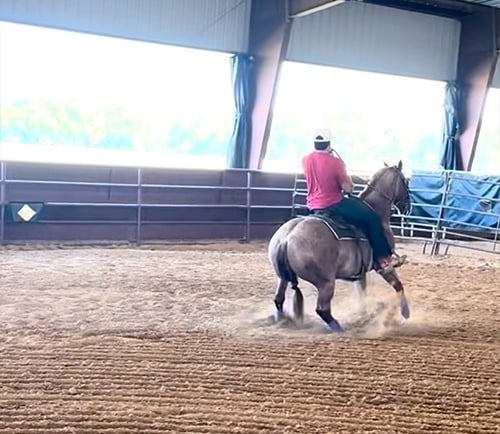
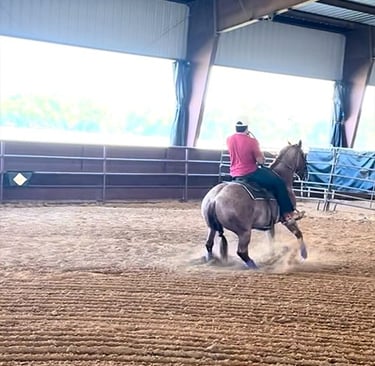
Conformation: Building a Horse That Holds Up
Conformation is often the first filter experienced buyers apply. While no horse is perfect, elite buyers understand which structural traits support longevity in the cutting pen.
At Lancaster Ranch, Reagan Lancaster looks closely at:
Shoulder angle and freedom of movement
Lower Hocks
Tail Set
Hind-end structure and engagement
Balance from front to back
Hoof quality and limb alignment
A Level Head (Not too high. Even.)
Poor conformation increases risk, regardless of talent. A horse may be brilliant on a cow, but without the physical foundation to sustain repeated stops and turns, long-term performance becomes questionable.
Pedigree: Clues, Not Guarantees
Pedigree matters, but not in isolation. Reagan Lancaster emphasizes that bloodlines provide context, not certainty.
At Lancaster Ranch, pedigree is evaluated for:
Proven cutting producers
Consistency across generations
Soundness trends within bloodlines
Compatibility with the buyer’s goals
Elite buyers understand that pedigree increases the odds, but it does not replace individual ability. A well-bred horse still must prove it belongs.
The Mind: Where Winners Are Made
Mental makeup is often the deciding factor at the highest levels. Reagan Lancaster frequently notes that many horses are physically capable of cutting, but only a few are mentally suited for sustained success.
Elite buyers look for horses that:
Stay calm under pressure
Maintain focus in unfamiliar environments
Recover quickly from mistakes
Show genuine interest in their work
At Lancaster Ranch, a quiet, confident mind is valued as highly as athleticism. Horses that overreact, anticipate incorrectly, or mentally fatigue early carry higher risk regardless of physical ability.
Training Progression: Direction Matters More Than Speed
How a horse has been developed often reveals more than how much it already knows. Reagan Lancaster evaluates training history carefully, especially with young or recently started horses.
Key questions at Lancaster Ranch include:
Is the horse progressing consistently?
Does it know the basic foundation?
Who built the foundation? (from breaking to cow introduction)
Has it been rushed or overfaced?
Does it improve with repetition or deteriorate?
Can it adjust when asked something new?
Elite buyers look for a clear upward trajectory. A horse that is improving steadily within a structured program presents far more upside than one that peaked early.
Risk Versus Upside: The Real Calculation
Every purchase involves risk. The difference between average buyers and elite buyers is how that risk is measured and managed.
At Lancaster Ranch, Reagan Lancaster helps buyers assess:
Current performance versus future ceiling
Soundness outlook over multiple seasons
Cost of continued development or maintenance
Resale potential under realistic scenarios
Some buyers are willing to assume more risk for higher upside. Others prioritize consistency and immediate results. Neither approach is wrong, but mismatched expectations often lead to disappointment.
Fit Matters More Than Flash
One of the most overlooked factors in purchasing is program fit. A horse that thrives in one environment may struggle in another.
Reagan Lancaster advises buyers to consider:
Rider experience and style
Competitive goals and level
Available time and resources
Training philosophy
At Lancaster Ranch, horses are matched intentionally, not just sold. The right fit increases performance, satisfaction, and long-term value for both horse and owner.
What Elite Buyers Avoid
Experienced buyers are just as defined by what they avoid as what they pursue. Reagan Lancaster notes several red flags that consistently raise concern:
Horses that rely on excessive handling
Inconsistent performance with no clear explanation
Short-term brilliance paired with physical strain
Training gaps disguised by talent
At Lancaster Ranch, transparency and realism guide every recommendation. A disciplined “no” often saves far more than a hopeful “yes.”
Writing the Check Is the Final Step, Not the First
For elite buyers, writing the check is simply the conclusion of a thoughtful process. By the time money changes hands, conformation, pedigree, mind, training progression, and risk assessment have already aligned.
Reagan Lancaster and Lancaster Ranch operate on the belief that successful purchases are not lucky—they are intentional. When the right horse meets the right program at the right time, the investment extends far beyond the sale.