
Understanding Soundness, Longevity, and Career Management in Cutting Horses with Reagan Lancaster
Reagan Lancaster of Lancaster Ranch often says that winning one show is easy compared to keeping a cutting horse competitive for years. In a sport built on explosive stops, lightning-fast direction changes, and intense mental focus, soundness is not accidental. It is managed.
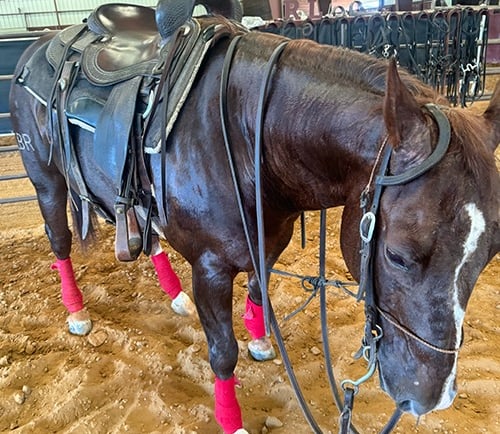
Reagan Lancaster of Lancaster Ranch often says that winning one show is easy compared to keeping a cutting horse competitive for years. In a sport built on explosive stops, lightning-fast direction changes, and intense mental focus, soundness is not accidental. It is managed.
At Lancaster Ranch, soundness, longevity, and career planning are not reactive measures. They are built into the daily program. Extending a cutting horse’s competitive life requires intentional joint care, intelligent workload management, structured rest cycles, and constant evaluation. Without those systems, even the most talented horse can decline prematurely.
The Physical Demands of Cutting
Cutting horses operate under extreme biomechanical stress. Each run requires:
Deep hind-end engagement
Rapid lateral shifts
Repeated stopping and acceleration
Independent reaction to unpredictable cattle
Reagan Lancaster emphasizes that these movements place consistent load on the hocks, stifles, suspensories, and soft tissue structures. At Lancaster Ranch, training decisions are made with those stress points in mind.
Understanding the demands of the sport is the first step in protecting a horse’s future.
Joint Care: Prevention Over Reaction
Joint maintenance is often misunderstood. Elite programs do not wait for visible lameness before acting.
At Lancaster Ranch, Reagan Lancaster approaches joint care as a preventative strategy that includes:
Regular veterinary evaluations
Monitoring subtle gait changes
Strategic use of joint support therapies
Careful scheduling of injections when appropriate
Adjustments in training intensity when needed
The objective is not to mask discomfort. It is to maintain structural integrity so that minor stress does not escalate into major injury.
Workload Management: More Is Not Better
One of the fastest ways to shorten a cutting horse’s career is excessive repetition. Reagan Lancaster believes discipline in workload is a defining trait of serious programs.
At Lancaster Ranch, workload management includes:
Short, focused schooling sessions
Avoiding unnecessary full-speed repetitions
Alternating intensity levels throughout the week
Reducing cow work when mental fatigue appears
The best horses are sharp because they are not overused. Precision replaces volume.
Rest Cycles: Strategic Recovery Windows
Rest is not downtime. It is part of the training plan.
Reagan Lancaster incorporates deliberate rest cycles at Lancaster Ranch to allow:
Soft tissue recovery
Mental reset
Inflammation reduction
Long-term soundness preservation
These rest periods may involve lighter riding, controlled turnout, or temporary breaks from cow work. Structured recovery prevents chronic wear from becoming career-ending damage.
Conditioning for Durability
Conditioning supports soundness when executed correctly. However, conditioning must be tailored to the individual horse.
At Lancaster Ranch, conditioning focuses on:
Building hind-end strength gradually
Maintaining cardiovascular fitness without fatigue
Encouraging flexibility through warm-up and cool-down routines
Monitoring respiration and recovery rates
Reagan Lancaster prioritizes controlled athletic development. Strong muscles protect joints. Balanced conditioning protects careers.
Mental Longevity: The Overlooked Factor
Physical health alone does not sustain a cutting horse. Mental fatigue can be just as limiting as joint strain.
Reagan Lancaster frequently evaluates:
Attitude toward cattle
Focus under show conditions
Signs of burnout or tension
Recovery time between competitive events
At Lancaster Ranch, mental longevity is protected through variation in routine, appropriate turnout, and avoiding unnecessary pressure. A horse that enjoys its work stays competitive longer.
Career Phases: Managing the Long View
A cutting horse’s career is not static. It evolves.
Reagan Lancaster structures career management at Lancaster Ranch around phases:
Development Phase – Building foundation and confidence
Peak Competitive Phase – Maximizing performance strategically
Maintenance Phase – Preserving soundness while competing selectively
Transition Phase – Adjusting workload or shifting roles
Each phase requires different intensity levels and recovery strategies. Horses that are managed with long-term vision consistently outperform those managed season-to-season.
Recognizing When to Adjust
Perhaps the most important skill in career management is knowing when to adjust.
Reagan Lancaster watches closely for:
Slight declines in performance sharpness
Recovery times that lengthen
Minor changes in gait or movement
Behavioral signals indicating discomfort
At Lancaster Ranch, small course corrections are made early. Delayed response is what turns manageable issues into career-ending problems.
Extending Competitive Careers Through Discipline
The difference between a short career and a sustained one rarely comes down to talent. It comes down to management.
At Lancaster Ranch, Reagan Lancaster views soundness as an asset that must be protected daily. Structured joint care, intelligent workload planning, deliberate rest cycles, and disciplined evaluation create horses that remain competitive season after season.
Cutting horses are elite athletes. But without disciplined career management, even elite athletes break down.
Longevity is not luck. It is the result of a system.