
Reagan Lancaster Explores The Daily Program Inside the High-Level Cutting Horse Training Facility at Lancaster Ranch
From the outside, success in the cutting pen often looks effortless. A quiet cow, a confident horse, a rider who seems perfectly in sync. What most people never see is the discipline, structure, and intention behind that moment. At Lancaster Ranch, Reagan Lancaster has built a daily program rooted in consistency, horse-first management, and long-term performance. Every ride, every feed, and every rest period serves a purpose. High-level cutting horses are not produced by chance; they are the result of systems repeated correctly, day after day. This is what a typical day looks like inside a professional cutting horse training facility.
Morning: Setting the Foundation
The day at Lancaster Ranch starts early (feed time starts at 7am and 4:30pm), not with speed or pressure, but with observation.
Before any horse is saddled, Reagan Lancaster and the team evaluate:
Overall demeanor and attitude
Soundness and movement coming out of the stall
Appetite and hydration
Minor changes in behavior that may indicate fatigue or soreness
Bowel movement checks are imperative as a daily check
This daily assessment dictates how each horse’s program will be adjusted. No two horses are treated exactly the same. At Lancaster Ranch, the program adapts to the horse, not the other way around.
Conditioning: Building an Athlete, Not Just a Performer
Conditioning is not about wearing a horse down. It is about preparing them to handle pressure, repetition, and travel without breaking down.
At Lancaster Ranch, conditioning typically includes:
Controlled warm-up routines focused on suppleness
Strength-building exercises rather than excessive mileage
Strategic use of loping, stops, and transitions
Careful monitoring of respiration and recovery times
Using “fresh” cows, training for efficient movements
Outside temperature (blanketing or not) is also an important piece
Feed inspection (checking for molding, moisture, etc.)
There’s a lot of “setup” for a winning horse. You can’t just put them in hard situations every time; it’s all about building confidence and easing them in. This is where the “cowiness” of a horse takes over, but there’s a trust bond between the rider and the horse. Finess over just “riding hard”.
Teaching the horse positions and movement efficiency is paramount in the process.
Reagan Lancaster emphasizes that a cutting horse must be fit enough to perform, but fresh enough to think. Over-conditioning is just as damaging as under-conditioning, especially in a sport that demands quick reactions and mental clarity.
Schooling: Quality Over Quantity
Schooling sessions at Lancaster Ranch are intentionally short and focused. The goal is refinement, not exhaustion.
Daily schooling may include:
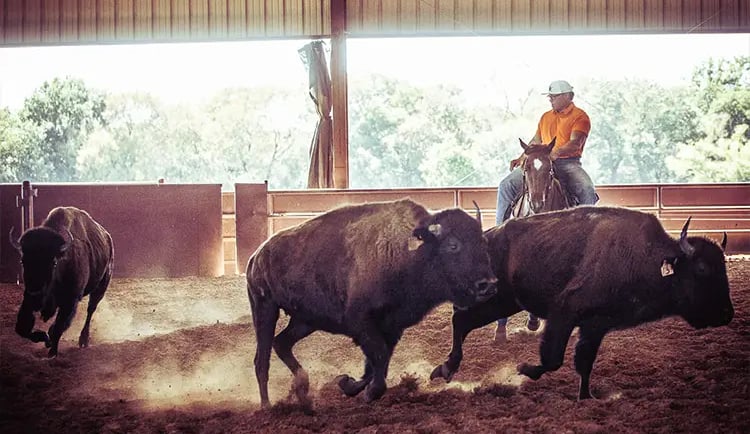
Flag work & the use of cutting-critter
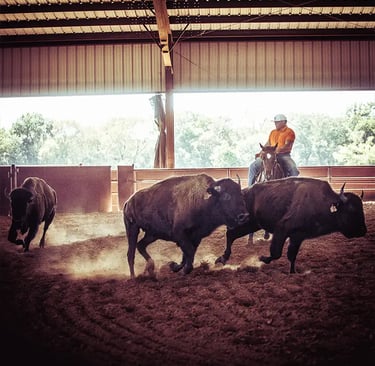
Works with Buffalo for pattern discipline
Controlled cow work tailored to each horse’s level
Situational exercises that reinforce confidence and patience
Light tune-ups rather than full competitive simulations
Ending sessions on a positive, relaxed note
Reagan Lancaster says, “The training time depends heavily on how well the horse does out of the gate. Each horse is different. It’s learning how to 'correct and release'. Release points are vital in training. When a horse comes out, you first have to watch and observe. Through this, you see the problem points and correct them. If they do everything right, you put them away. Overworking ‘correct’ horses can be problematic and counterintuitive to overall success.”
Reagan Lancaster believes that great cutting horses are trained to make decisions, not forced into them. Too much pressure too often dulls instinct. The daily program is designed to sharpen it.
Midday: Rest and Recovery Are Part of Training
One of the most overlooked aspects of elite cutting horse programs is what happens after the ride.
At Lancaster Ranch, recovery is treated as a performance tool:
Proper cool-down routines
Proper bathing and shampooing on a regular basis
Access to fresh water and balanced electrolytes when needed
Stall rest balanced with turnout depending on the horse
Bodywork, stretching, chiropractic adjustments, and preventative care as part of the schedule
Reagan Lancaster is deliberate about protecting longevity. A horse that feels good mentally and physically today is far more likely to perform consistently months or years down the road.
Nutrition: Fueling Performance and Longevity
Nutrition at Lancaster Ranch is not static. It is constantly evaluated and adjusted based on workload, season, and individual needs.
Key principles include:
High-quality forage as the foundation
Balanced concentrates tailored to energy demands
Supplements used strategically, not excessively
Close monitoring of body condition and muscle tone
Wrapping horses with proper leg protection (for tendon support)
Blanketing also conditions their coats so they don’t “hair up”.
Proper worming programs are also vital to long-lasting health
Proper dental work and normal checks (teeth health is an often-overlooked step)
Reagan Lancaster approaches feeding with the same discipline as training. The goal is sustained performance, not short-term spikes that lead to burnout or soundness issues.
Turnout Philosophy: Mental Health Matters
Turnout is not an afterthought at Lancaster Ranch; it is a critical part of the daily program.
Depending on the horse, turnout may be used to:
Reduce mental stress
Encourage natural movement
Improve overall attitude and focus
Support soundness through controlled freedom
Overworking can “dull” horses out
Reagan Lancaster often notes that a mentally content horse is far easier to train than a confined, anxious one. Turnout decisions are made carefully to balance safety with well-being.
Evening: Reviewing and Planning Ahead
As the day winds down, Reagan Lancaster reviews how each horse responded:
Did the horse progress, plateau, or show signs of fatigue?
Does tomorrow require adjustment?
Is rest or a lighter day warranted?
At Lancaster Ranch, training is never on autopilot. Every day informs the next. This feedback loop is what allows horses to improve steadily without being overfaced.
Why Structure Separates Average From Elite
What separates high-level cutting horse facilities from average programs is not intensity; it is structure.
At Lancaster Ranch, the daily program is designed to:
Develop confident, thinking horses
Protect soundness and extend careers
Prepare horses for both competition and resale
Align training decisions with long-term goals
Reagan Lancaster has built a system that respects the horse as both an athlete and an investment. Success in the cutting pen is not the result of one great ride, but thousands of disciplined, intentional days stacked together