
25 Years of Lancaster Ranch: Building A Legacy of Texas Horse Cutting with Reagan Lancaster
For twenty five years, Lancaster Ranch (led by Reagan Lancaster) has operated at the intersection of tradition, discipline, and performance. In an industry where trends change quickly and longevity is rare, sustained success is not accidental. It is earned through consistency, restraint, and respect for the horse. Founded and led by Reagan Lancaster, Lancaster Ranch has grown from a modest stretch of pastureland into one of the most established cutting horse operations in North Texas. Over the course of a quarter century, facilities have expanded, tools have improved, and industry expectations have evolved. Yet the core principles that built Lancaster Ranch remain firmly intact.
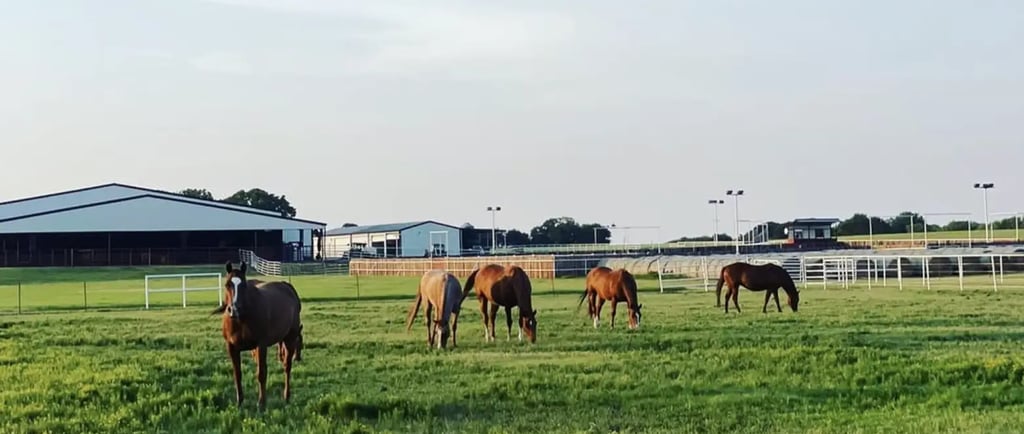
For twenty five years, Lancaster Ranch has operated at the intersection of tradition, discipline, and performance. In an industry where trends change quickly and longevity is rare, sustained success is not accidental. It is earned through consistency, restraint, and respect for the horse.
Founded and led by Reagan Lancaster, Lancaster Ranch has grown from a modest stretch of pastureland into one of the most established cutting horse operations in North Texas. Over the course of a quarter century, facilities have expanded, tools have improved, and industry expectations have evolved. Yet the core principles that built Lancaster Ranch remain firmly intact.
This milestone offers an opportunity not only to reflect on how the ranch has evolved, but also to clarify what has never changed.
Built Over Time, Not Overnight
Lancaster Ranch did not begin as a finished operation. It was built deliberately, pasture by pasture, decision by decision. What once consisted of a few open fields and working cattle space has grown into a fully integrated ranch designed to support every aspect of a modern cutting horse program.
Today, Lancaster Ranch includes indoor arenas, outdoor arenas, world class horse barns, commodity barns, breeding facilities, working cattle pens, feed lots, and six homes that support the people who make the operation run. The grounds are maintained year round by four families who live and work on the property, with several employees who have remained with the ranch for more than twenty years.
That continuity is not incidental. It reflects a culture built on accountability, shared standards, and long term commitment.
One of the reasons Reagan Lancaster recognized the long-term significance of this property was its place in cutting horse history. This land is where the Triple Crown winner Smart Little Lena was born, a distinction that sets it apart as a natural home for an elite cutting horse operation. Today, growing to Hibrow Cat, Metallic Cat, Boonrising, Stevie Ray Von, and more… these horses are now proving to be solid horses for the new generation of cutting horses that we are breeding today.
What began as a practical skill rooted in working ranch life has evolved into a sophisticated and highly competitive business. Today, cutting horse competition represents the premier western equine sport, with Lancaster Ranch generating millions through the development, showing, and sale of elite horses.
What Has Changed Over 25 Years
Facilities and Infrastructure
One of the most visible changes at Lancaster Ranch has been the continued investment in facilities. Arenas, footing, stalls, turnout areas, and cattle systems have all been improved over time, not for appearance or scale, but to support horse welfare, soundness, and longevity.
Controlled training environments now allow for more consistent conditioning and safer development. Barn designs support health, airflow, and efficiency. Cattle handling systems allow horses to gain real experience without unnecessary stress. Each improvement serves a purpose tied directly to performance and care.
Cattle pens allow the feed lot operation to function while integrating the movement of cattle from the feed lot into working pens, easily from outside pens to indoor arenas.
Training Tools and Knowledge
The science surrounding horse health and development has advanced significantly over the last twenty five years. At Lancaster Ranch, access to veterinary diagnostics, nutrition research, and conditioning data has expanded what is possible in training and recovery.
Training methods today are informed by a deeper understanding of biomechanics, physical stress, and long term soundness. Horses are conditioned with greater precision, and recovery is treated as a critical component of performance.
At the same time, Reagan Lancaster emphasizes that technology supports decision making but never replaces horsemanship. The foundation remains feel, timing, and judgment developed through experience.
“Cattle Savers” like working flags, remote-controlled cows, or computer-operated cows on tracks are all part of the operation to save on cows and increase a variety of training options for cutting horses.
The American Buffalo is also a pivotal tool used to save on cows during training, and offers a unique training experience at Lancaster Ranch.
Industry Expectations
The cutting horse industry has also changed. Buyers today are more educated and more discerning. They expect transparency, accurate representation, and honest communication.
Horses are no longer evaluated solely on talent. Durability, mindset, and suitability for specific riders matter just as much as raw ability. The market rewards consistency and credibility over hype.
Lancaster Ranch has adapted to these expectations by remaining factual, straightforward, and disciplined in how horses are developed and represented.
Operational Scale and Structure
As Lancaster Ranch has grown, so has the need for clear structure. Processes around breeding, development, showing, and sales are now more deliberate and defined than in the early years.
Growth has been intentional rather than rushed. Every expansion has been evaluated through the lens of whether it supports the core mission of producing honest, capable cutting horses.
What Has Not Changed
Cow Sense Above All Else
Despite all advancements, one principle remains unchanged at Lancaster Ranch. Real cow sense is non-negotiable.
No technology replaces time spent on cattle. Horses are developed to read cattle naturally, to anticipate movement, and to think independently. Maneuvers are not forced. Intelligence is cultivated.
This philosophy aligns with the roots of cutting itself, which originated on the open range where elite horses distinguished themselves by instinct and feel rather than obedience alone.
Today, cow sense has been coupled with efficiency in movements to position the horse to move easily against an athletic cow, setting themselves up to win instead of being put into a position to struggle when it matters most.
A Long-Term View of the Horse
From the beginning, Reagan Lancaster has believed that horses should be developed with their entire career in mind. Early results never outweigh long-term soundness.
Shortcuts are avoided, even when market pressure exists. Horses are allowed the time they need to mature physically and mentally. Longevity and durability are valued more than short-term recognition.
Discipline and Standards
Daily routines, attention to detail, and accountability remain core expectations at Lancaster Ranch. Consistency in care and training is viewed as a competitive advantage, not a constraint.
Results are expected to be earned through preparation and repetition. They are never manufactured.
Relationships Built on Trust
Lancaster Ranch has always prioritized long-term relationships over individual transactions. Horses are represented accurately and honestly. Communication with owners and buyers is direct and transparent.
Trust is built slowly and protected carefully. That approach has allowed Lancaster Ranch and Reagan Lancaster to maintain credibility across decades of competition and sales.
Lancaster Ranch has also enjoyed nurturing great relationships with local veterinarians like Williams & Stephens, Chris Ray, and Ty Tipton, to name a few. This has been a vital piece of the puzzle to keep our horses going down the road and maintaining overall excellent health year-round.
Cutting in Context
Cutting is the act of separating a single cow from a herd and preventing it from returning. Once a cow is separated, the rider is no longer allowed to use the reins with only his feet. At that point, the horse must think for itself, anticipate the cow’s movements, and react independently as possible with the help of the rider to finesse the run into a little brighter and stop a little harder. The rider can hold and ride to get across the cow to stop it while guiding the horse to move efficiently. People who think the horse can “do it themselves” are wildly disappointed when they hop on and find out how imperative proper control is. A cutting horse rider is usually a much better rider than in any other discipline. The reactions must be lightning fast and learned over years of training and practice.
It is the only equine competition where the horse is required to make decisions on its own. Intelligence, athleticism, and instinct are all judged.
These roots trace back to the open range, where cutting horses were elite members of the remuda. Their ability to handle cattle efficiently made difficult work faster, safer, and even enjoyable. The act of cutting was inspired by separating cows in the ween process.
That heritage remains alive at Lancaster Ranch.
A Unique Place in a Changing Landscape
Lancaster Ranch operates in Denton County, which registers more horses born each year than any other county in Texas. While the surrounding area has transitioned from rural land to suburban development, proximity has created advantages as well.
Major cutting events are now within easy reach. Fort Worth hosts the three largest shows of the year, commonly referred to as the Triple Crown. Additional major events take place in nearby cities such as Weatherford, Sulphur Springs, Melissa, Graham, Hamilton, Oklahoma City, and Sweetwater. Tulsa, home to another major show, is also within practical traveling distance.
This access allows Lancaster Ranch to compete at the highest levels while remaining grounded in its home base.
A Through Line That Endures
While the industry has evolved, the principles that built Lancaster Ranch have not. Facilities and tools support the program, but they do not define it.
Under the leadership of Reagan Lancaster, the ranch continues to operate with patience, intention, and respect for the horse. Reagan Lancaster has personally earned more than six hundred thousand dollars in competition earnings, all while maintaining the standards that have defined Lancaster Ranch for twenty five years.
Looking Forward
Twenty five years is not a finish line. It is a responsibility. It is a legacy.
For Lancaster Ranch, the focus remains the same. Produce honest horses. Maintain discipline. Protect soundness. Maintain great pastures, cows and buffalo to help the program which requires a lot of buying and selling. Build relationships that last.
The next chapter will be written with the same principles that guided the first.