
How Show Schedules and Competition Strategy Impact a Cutting Horse’s Career with Reagan Lancaster
A look at why the calendar matters as much as the bloodline — and how thoughtful showing builds horses that last. In the cutting horse industry, talent gets noticed but strategy gets remembered. A horse can be born with all the cow in the world, train with the best hands in Texas, and still fall short of its potential if the show schedule doesn’t fit the animal. At Lancaster Ranch in Pilot Point, Texas, Reagan Lancaster has spent more than two decades watching this play out firsthand. With over $3 million in produced winnings and a roster that has carried names like Talamasca Cat, Desire A ‘lil Pepto, and Stylish Lena, the program has been built on a simple truth: a cutting horse’s career is shaped just as much by where and when it shows as by how it was bred or trained. The calendar is a competitive tool, and using it well is the difference between a flash-in-the-pan futurity horse and a sound, earning competitor that pays for itself year after year.
The Show Schedule as a Career Roadmap
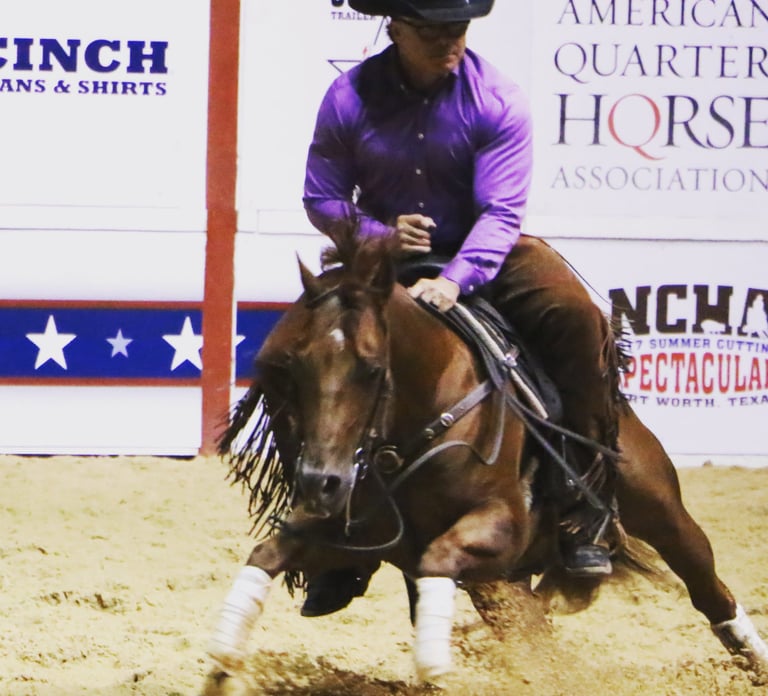
Cutting horses don’t have long, open-ended seasons the way some disciplines do. The NCHA calendar is built around a tight cluster of high-stakes, age-restricted events — the Futurity for 3-year-olds, the Super Stakes and Summer Spectacular for 4- and 5-year-olds, and the Derby in between — with weekend shows, aged events, and limited-age events filling in the rest of the year. Once a horse ages out of one bracket, that door closes for good. There’s no going back to win a Futurity at six.
That structure forces every owner and trainer to make real decisions early. Do you point a horse toward the Futurity and accept the wear that comes with chasing a single December weekend? Do you skip it and aim for a longer arc through the aged-event circuit? Do you season the horse at weekend shows first and protect its limited-age eligibility for later? At Lancaster Ranch, those questions get asked individually for every prospect in the barn. The answer depends on the horse — not on what was decided for the horse in the next stall over.
Why Strategy Beats Schedule Every Time
A common mistake in this industry is treating the show calendar as something to chase rather than something to use. The big-money events draw attention, but a horse that’s pushed too hard, too soon, can have its career shortened by the very showing that was supposed to launch it. Soundness issues, sour attitudes, and lost confidence in the herd are all real costs of a poorly planned campaign.
A thoughtful competition strategy looks at a horse holistically: its physical maturity, mental readiness, training stage, and where it actually fits in the field. A horse that’s an honest 80-point cutter at a weekend show may not be ready to mark a 220 in the Will Rogers Coliseum, and entering it there before it’s ready can shake confidence that took months to build. Reagan Lancaster’s philosophy at Lancaster Ranch leans toward letting horses tell you what they’re ready for, then matching the schedule to that readiness — not the other way around.
Key Factors That Shape a Smart Show Plan
Every campaign comes down to balancing a handful of variables. The trainers and owners who do this well tend to weigh the same things in roughly the same way:
Age and eligibility windows. Limited-age events are a one-shot opportunity. Burning a horse on classes it isn’t suited for wastes that window.
Physical condition and recovery time. Cutting is hard on hocks, stifles, and front ends. Back-to-back weekends without recovery is how you turn a 6-year-old into a 10-year-old.
Mental wear. A horse that gets over-shown can get cow-sour, anticipate, or lose its read on cattle. Pulling back at the right time is a strategic move, not a retreat.
Cattle and pen conditions. Some horses thrive in the deep, fresh cattle of a major. Others mark better at smaller venues with more predictable herds. A good plan plays to the horse’s strengths.
Earnings ladder. Strategic showing builds a horse’s lifetime earnings record, which directly impacts resale value, breeding value, and eligibility in non-pro and amateur classes down the road.
The rider equation. Whether a horse is shown by an open trainer, a non-pro owner, or both at different events significantly changes which classes make sense and when.
Building Long Careers, Not Just Big Weekends
Some of the most respected horses in the cutting world weren’t the loudest in any one event — they were the ones that kept showing up, year after year, marking competitive runs across multiple age divisions. That kind of longevity doesn’t happen by accident. It’s the result of someone choosing, again and again, to skip an event the horse didn’t need, to rest a horse before it asked to be rested, and to enter classes where the horse could win rather than just compete.
At Lancaster Ranch, this approach has shaped how Reagan Lancaster develops young horses through the program — from yearlings, to 2-year-olds in early training, to 3-year-old futurity prospects, and on to seasoned aged-event campaigners. The partnership with riders like Lee Francois at L & H Cutting Horses reflects the same idea: match the horse to the right hand at the right time, and the schedule starts to write itself. The horses that come out of that system tend to hold their value longer, both as competitors and as breeding stock, because their records reflect consistency rather than a single hot weekend followed by silence.
Strategy as a Form of Horsemanship
It’s easy to think of competition strategy as a business decision — entry fees, payouts, ROI — and it certainly is that. But at its core, choosing a show schedule well is also a form of horsemanship. It’s an acknowledgment that the horse standing in your barn isn’t a unit of production, and that its career has chapters that need to be written in the right order. The bloodline brings the raw material. The training shapes it. The schedule decides whether all that work compounds over years or burns out in a season.
Lancaster Ranch was built on that understanding. The property itself — the birthplace of Smart Little Lena, just 40 minutes from Will Rogers Coliseum — carries a kind of history that reminds you what’s possible when good horses are managed well over time. Reagan Lancaster’s focus on long-term campaigns, careful event selection, and matching horses to the right riders is what allows the ranch to keep producing horses that mark, win, and hold their value well past their futurity year.
Final Thought
A great cutting horse can come from a lot of places. A great cutting horse career almost always comes from somewhere thoughtful. The trainers, owners, and programs that understand the calendar as a strategic tool — not a checklist — are the ones whose horses are still earning checks five and ten years after the futurity lights go out. At Lancaster Ranch, that long view is the whole point.
To learn more about the cutting horse program at Lancaster Ranch, view available horses for sale, or get in touch with Reagan Lancaster directly, visit lancasterranch.com.