
From Pedigree to Payoff: Reagan Lancaster Explains How Bloodlines Translate Into Performance
Reagan Lancaster of Lancaster Ranch often explains to owners and buyers that pedigree is not about hype. It is about probability. In the cutting horse industry, bloodlines influence far more than a name on a registration paper. They shape how a horse thinks, how it moves, how it holds up over time, and how reliably it can compete at a high level. At Lancaster Ranch, pedigree is evaluated as a strategic tool that helps translate genetic potential into real-world performance. Trainability also gives you the confidence you need to make the call.
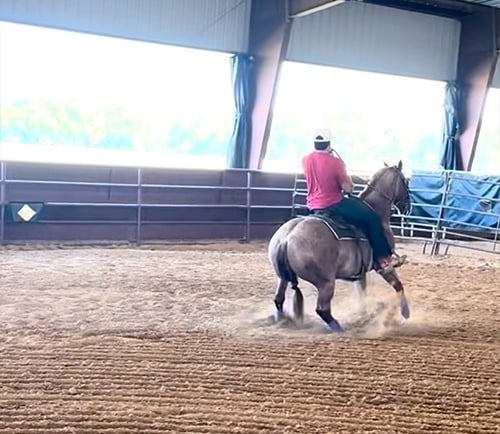
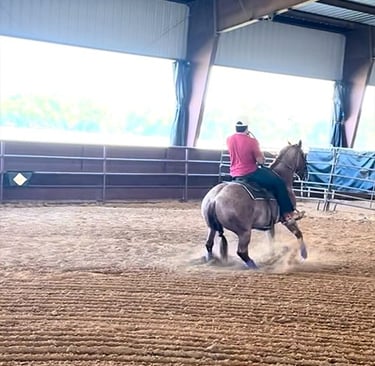
Reagan Lancaster of Lancaster Ranch often explains to owners and buyers that pedigree is not about hype. It is about probability. In the cutting horse industry, bloodlines influence far more than a name on a registration paper. They shape how a horse thinks, how it moves, how it holds up over time, and how reliably it can compete at a high level. At Lancaster Ranch, pedigree is evaluated as a strategic tool that helps translate genetic potential into real-world performance. Trainability also gives you the confidence you need to make the call.
Understanding how lineage impacts trainability, soundness, and longevity allows buyers to make smarter decisions and build cutting horse programs with staying power.
Pedigree as a Predictor, Not a Promise
Pedigree does not guarantee success, but it does improve the odds. Reagan Lancaster emphasizes that certain traits consistently appear in proven cutting bloodlines, not by accident, but through generations of selection.
At Lancaster Ranch, pedigree is used to identify:
Natural cow sense and reading ability
Mental composure under pressure
Athletic balance suited to the cutting pen
Structural traits linked to durability
Breeding plays a key role in trainabliilty. This historical data helps build confidence and helps to motivate to keep the training going, knowing where the horse came from.
Bloodlines provide a roadmap. They reveal patterns that help experienced horsemen anticipate how a horse is likely to develop.
Trainability: How Bloodlines Influence Learning Curve
One of the first areas where pedigree shows itself is in trainability. Horses from proven cutting lines often demonstrate:
Faster understanding of cow work
Willingness to stay engaged without excessive pressure
Ability to learn from light, consistent cues
Mental resilience during early training
Reagan Lancaster notes that trainability is not about speed alone. At Lancaster Ranch, the most valuable horses are those that absorb lessons, retain them, and continue to improve over time. Pedigree often plays a significant role in that capacity.
Cow Sense & Intensity: The Inherited Advantage
Cow sense remains the defining trait of elite cutting horses. While training refines it, cow sense itself cannot be manufactured.
At Lancaster Ranch, Reagan Lancaster looks for bloodlines that repeatedly produce horses that:
Anticipate a cow’s movement naturally
Stay locked on without rider micromanagement
Make confident, independent decisions
Maintain control without unnecessary aggression
These instincts are passed down. Horses that descend from generations of effective cow horses are far more likely to display these behaviors early and consistently.
Soundness: The Hidden Value of Proven Lineage
Soundness is often the least glamorous but most important aspect of pedigree evaluation. Reagan Lancaster frequently reminds buyers that long-term competitiveness depends on durability.
At Lancaster Ranch, bloodlines are analyzed for:
Longevity in competition
Structural consistency across offspring
Resistance to common wear-related issues
Ability to handle repeated stops and turns
A flashy young horse that cannot stay sound offers limited payoff. Proven bloodlines that hold up season after season create far greater long-term value.
Athleticism and Movement Efficiency
Not all athleticism is equal. Cutting demands specific movement patterns: quick lateral shifts, powerful stops, and controlled acceleration.
Reagan Lancaster evaluates lineage for:
Natural balance and coordination
Hind-end strength without stiffness
Efficient stride length and reach
Smooth transitions between maneuvers
At Lancaster Ranch, efficiency is prized over excess motion. Horses that move economically conserve energy and reduce stress on joints, which directly impacts performance longevity.
Longevity and Career Sustainability
The true payoff of pedigree often reveals itself years into a horse’s career. Reagan Lancaster points out that the most valuable cutting horses are not always the fastest starters, but the ones that remain competitive.
Lancaster Ranch prioritizes bloodlines known for:
Consistency across multiple seasons
Mental durability under ongoing competition
Adaptability as classes and riders change
Strong resale or breeding potential
Longevity transforms a good horse into a great investment.
Pedigree and the Business Side of Cutting Horses
Beyond performance, pedigree directly influences market perception and resale value. Reagan Lancaster approaches bloodlines with a business mindset at Lancaster Ranch.
Strong lineage can:
Increase buyer confidence
Support higher resale valuations
Enhance breeding potential post-competition
Reduce perceived risk for future owners
However, pedigree must be supported by correct development. Even the best bloodlines require disciplined management to reach their full potential.
Matching Bloodlines to the Right Program
One of the most common mistakes Reagan Lancaster sees is placing the wrong bloodline into the wrong environment. Certain horses thrive under specific styles of training and competition schedules.
At Lancaster Ranch, pedigree evaluation is paired with:
Rider ability and goals
Training philosophy
Competitive timeline
Long-term ownership plans
When bloodlines align with program structure, the payoff becomes far more predictable.
From Paper to Performance
At the highest level, pedigree is only valuable if it translates into performance in the pen. Reagan Lancaster and Lancaster Ranch operate with the understanding that bloodlines set the stage, but execution determines the outcome.
When the right lineage is developed within a disciplined, horse-first system, pedigree becomes more than a name. It becomes a competitive advantage.